10 Simple Techniques For Do Faucet Aerators Save Water
 About Dredging A Small Lake
Sunshine is likewise extremely crucial to facultative lagoons since it contributes to the growth of green algae on the water surface. Since algae are plants, they need sunlight for photosynthesis. Oxygen is a by-product of photosynthesis, and the existence of green algae contributes considerably to the quantity of oxygen in the aerobic zone.
The oxygen in the aerobic zone makes conditions favorable for aerobic germs. Both aerobic and anaerobic germs are very important to the wastewater treatment procedure and to each other. Germs treat wastewater by converting it into other compounds. Aerobic bacteria transform wastes into carbon dioxide, ammonia, and phosphates, which, in turn, are utilized by the algae as food.
9 Easy Facts About Why Is Water Aerated In The Treatment Process Described
A number of these spin-offs are then used as food by both the aerobic germs and algae in the layers above. In addition, the sludge layer at the bottom of the lagoon has plenty of anaerobic germs, sludge worms, and other organisms, which offer treatment through digestion and prevent the sludge from quickly building up to the point where it needs to be gotten rid of.
Sludge in all lagoons accumulates quicker in cold than in warm temperatures. Nevertheless, lots of facultative lagoons are designed to work well without sludge removal for 5 to ten years or more. Lagoons must be developed by certified specialists who have Visit website had experience with them. License requirements and regulations concerning aspects of lagoon style differ, but there are some design problems typical to all lagoons.
4 Simple Techniques For Why Is Water Aerated In The Treatment Process
have laws concerning the siting of lagoons, including their distance from groundwater below, and their distance from houses and companies - algae chemical. Lagoons also must lie downgrade and downwind from the houses they serve, when possible, to avoid the additional cost of pumping the wastewater uphill and to avoid odors from becoming a nuisance.
Any blockages to wind or sunlight, such as trees or surrounding hillsides must be considered. Trees and weed growth around lagoons should be controlled for the very same reasons. In addition, water from surface drainage or storm runoff need to be kept out of lagoons, if needed set up diversion balconies or drains pipes above the site.
The 10-Minute Rule for Demucking Pond
The size and shape of lagoons is designed to optimize the amount of time the wastewater remains in the lagoon. Detention time is normally the most essential element in treatment. In basic, facultative lagoons need about one acre for each 50 houses or every 200 people they serve. Aerated lagoons deal with wastewater more effectively, so they tend to require anywhere from one-third to one-tenth less land than facultative lagoons.
Lagoons can be round, square, or rectangle-shaped with rounded corners. Their length needs to not go beyond three times their width, and their banks need to have outdoors slopes of about three systems horizontal to one unit vertical. This moderate slope makes the banks much easier to trim and preserve. In systems that have dikes separating lagoon cells, dikes likewise ought to be easy to preserve.
Rumored Buzz on Why Is Water Aerated In The Treatment Process
The bottoms of lagoons need to be as flat and level as possible (other than around the inlet) to help with the constant flow of the wastewater. Keeping the corners of lagoons rounded also assists to maintain the overall hydraulic pattern in the lagoons and prevents dead spots in the flow, called short-circuiting, which can impact treatment.
Partial-mix oxygenated lagoons are often created to be much deeper than facultative lagoons to permit room for sludge to pick the bottom and rest undisturbed by the unstable conditions developed by the aeration procedure. Wastewater enters and leaves the lagoon through inlet and outlet pipelines. Modern creates place the inlet as far as possible from the outlet, on opposite ends of the lagoons, to increase detention times and to avoid short-circuiting.
Rumored Buzz on Do Faucet Aerators Save Water
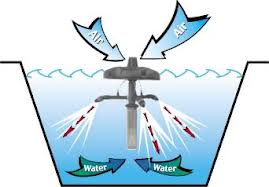
Outlets are developed depending on the approach of discharge. They typically consist of structures that enable the water level to be raised and decreased. Aerators, which are used instead of algae as the main source of oxygen in oxygenated lagoons, work by releasing air into the lagoon or by agitating the water so that air from the surface area is mixed in (Pond aerators).
 Not known Details About How To Make Aerated Water
Different aerator designs produce either great or coarse bubbles, and work either on the water surface area or immersed. Subsurface aerators are more suitable in climates where the lagoon is most likely to be covered by ice for part of the year. Lagoons can draw in kids, pets, and unsuspecting grownups, who may believe they appear like excellent places to play and even swim.
Why Is Water Aerated In The Treatment Process for Beginners
Safety training should be provided for house owners, operators, and anyone else working with these systems. Laws in a lot of locations require lagoons to be surrounded by high fences with locking gates and have indication plainly published. Among the advantages of lagoons is that they need fewer personnel hours to run and maintain than many other systems.
Routine inspections, testing, record keeping, and maintenance are required by local and state companies, and are all required to ensure that lagoons continue to offer good treatment. How frequently lagoons need to be examined depends upon the kind of lagoon, how well it operates, and regional and state requirements. Some lagoons require more frequent checking in the spring and summertime, when yard and weeds grow quickly and when seasonal rental homes are occupied.
The 10-Second Trick For Clearing Ponds Of Weeds
Among the most crucial indicators are biochemical oxygen demand (BODY) and overall suspended solids (TSS). BOD is essential because it measures how much oxygen organisms in the wastewater would take in when released to receiving waters. TSS measures the quantity of solid materials in the wastewater. If body or TSS levels in the effluent are too high, they can deteriorate the quality of receiving waters (pond dredging equipment).
However because lagoon conditions alter constantly, a lot of tests need to be performed several times, and sometimes at particular periods or times of the day, to get a precise big picture of the lagoon's health. Operators can be trained to take samples and perform some or all of the tests themselves. It is generally more practical for part-time operators of little systems to send out samples out to a lab to be checked - natural algae remover - aerator tank for well water.
The 7-Minute Rule for Do Faucet Aerators Save Water
These weeds use up important space that needs to be occupied by algae, they can stop sunshine from penetrating the wastewater, and sluggish blending by the wind. Scum that collects on the water surface area ought to be eliminated for the very same factors as duckweed, but also to manage smells and bugs and to avoid inlet and outlet clogging. algae growth in water is controlled by.
Lastly, the depth of the sludge layer in lagoons must be inspected a minimum of once per year, usually from a boat utilizing a long stick or hollow tube. In most lagoon systems, sludge eventually builds up to a point it must be removed, although this may take years. Performance will suffer if too much sludge is permitted to build up.
The 20-Second Trick For Dredging A Small Lake
Duckweed, watermeal, and hyacinth that grow on the water surface area ought to be physically eliminated, typically from a boat with a tool, like a rake or skimmer. Blue-green algae-Unlike green algae, this alga is stringy and can clump, block sunlight, and cause short-circuiting. It can control lagoons when conditions are poor, when p, H is low, or when protozoa consume all of the green algae.
"Lagoons were an improvement then, and they still work well today." Found on Flathead Lake in northwest Montana, the city was integrated in 1910 and has actually experienced sluggish, steady development throughout the years. Recently, the development rate has increased to about 5 percent each year, bringing the current population to about 4,300.
Getting My Dredging A Small Lake To Work
 The 8-Minute Rule for How To Clean A Natural Pond
Flows were simply diverted from one lagoon to the other every 6 months. To accommodate growth, the city developed a brand-new system in 1981 with 3 aerated lagoons and one polishing lagoon. Polson also started to operate its own laboratory to monitor the system (aeration in water treatment). "We chose on the aerated system based upon recommendations from our engineers, public hearings, and the low operation and maintenance costs," says Campbell.
We've added a wind-powered aerator and mixer that works rather well, and three drifting aerators. The only powerlessness in the system are the original fine bubble aerators, which push the bottom and are very prone to blocking." According to Campbell, homeowners appear happy with the absence of smell from the system and its low expense.